Categorias
Novo blog
Por que é necessário focar especificamente em parâmetros como "perda de inserção", "perda de retorno" e "largura de banda" em linhas de alta velocidade (como Ethernet Gigabit) SPDs?
July 10 , 2026SPD de sinal (Dispositivo de Proteção contra Surtos) protege sinais de dados de alta frequência. Sua função principal é minimizar a interferência na qualidade da transmissão do sinal, ao mesmo tempo em que fornece proteção contra surtos. Parâmetros tradicionais, como tensão residual (Up) e capacidade de corrente de surto (In/Iimp), garantem a "sobrevivência" do equipamento, enquanto os parâmetros mencionados acima garantem a "comunicação" do sistema.
Perda de inserção: Mede a atenuação da intensidade do sinal causada pelo SPD (Dispositivo de Proteção contra Surtos). Uma perda de inserção excessiva pode levar à diminuição da amplitude do sinal, ao aumento da taxa de erro de bits e à redução da distância de comunicação.
Perda de retorno: Mede a correspondência de impedância entre o SPD (Dispositivo de Proteção contra Surtos) e a linha de transmissão. A incompatibilidade de impedância pode causar reflexão do sinal, levando a oscilações e distorções de dados, o que é fatal para sinais digitais de alta velocidade.
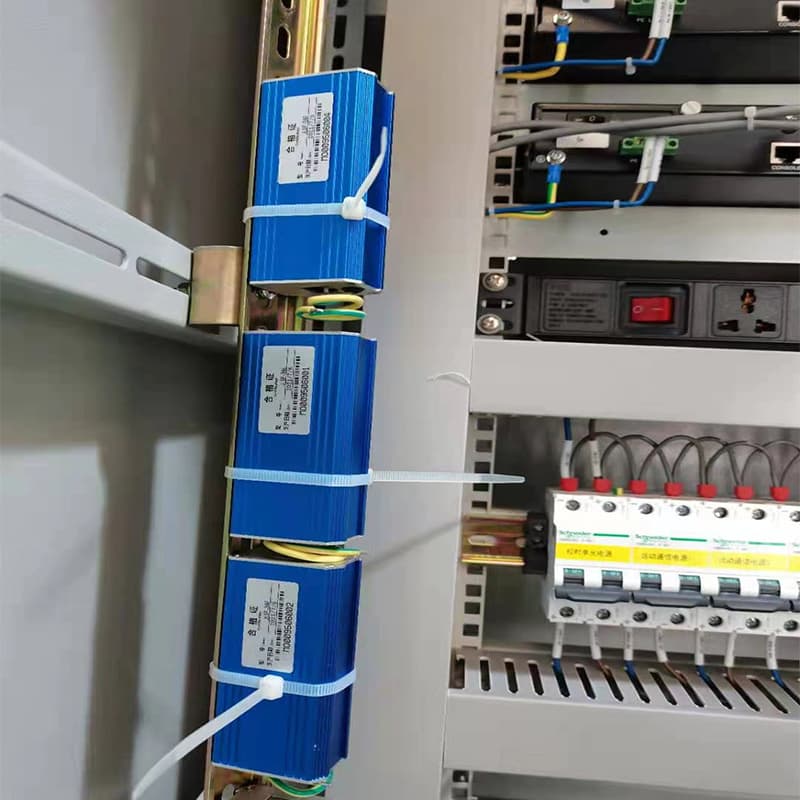
Largura de banda: A faixa de frequência na qual o SPD (Dispositivo de Proteção contra Surtos) pode operar de forma eficaz. A largura de banda deve cobrir a frequência fundamental do sinal e seus harmônicos; caso contrário, os componentes de alta frequência do sinal serão filtrados, causando distorção da forma de onda.
Portanto, as especificações rigorosas desses parâmetros na norma garantem que o SPD não seja mais simplesmente um "dispositivo de descarga de corrente de raio", mas um sofisticado "guardião da integridade do sinal", cujo projeto exige a integração de circuitos de alta frequência, teoria de linhas de transmissão e técnicas de compatibilidade eletromagnética.
Jinli Elétrico Wechat

Endereço :No. 97-2 Yonghe Road, High-tech Zone, Hefei, Anhui, China
Tel : 0086-0551-65307363
E-mail : jinlispd@ahjinli.com
E-mail : lynn@ahjinli.com
Whatsapp/Wechat : 15209885162